

Florida estate planning law in 2026 governs how property, assets, and decision-making authority are handled during life and after death. For Orlando families, these rules are especially important due to Florida’s unique homestead protections, probate framework, and spousal rights. Understanding how Florida estate planning law applies in practice helps families avoid unintended outcomes, court delays, and conflicts.
What Florida Estate Planning Law Means in 2026
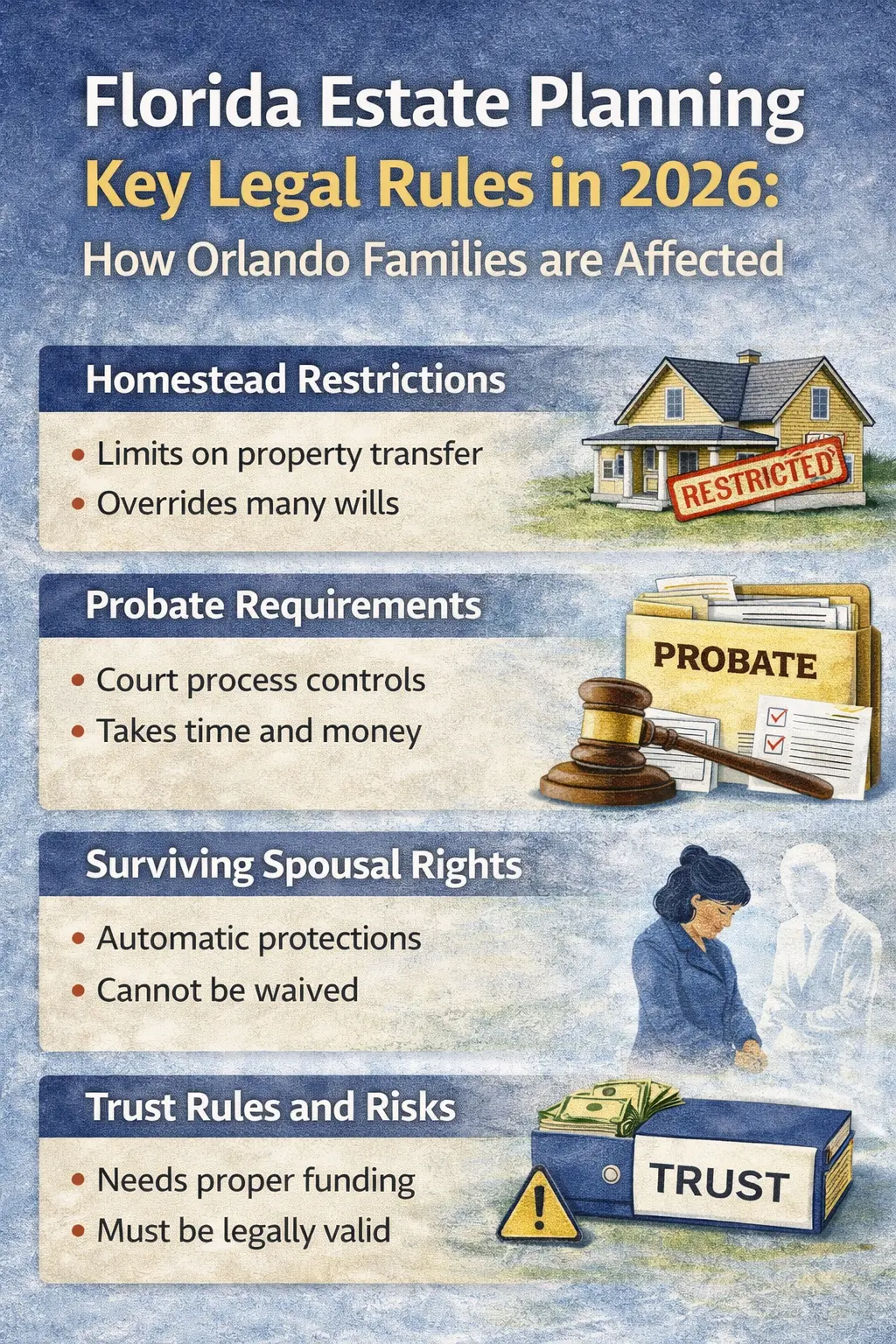
Florida estate planning law in 2026 refers to the statutes, constitutional provisions, and court procedures that control wills, trusts, homestead property, powers of attorney, and probate administration. These rules determine how assets are transferred, who has authority to act, and what protections apply to families and surviving spouses.
Florida has not replaced its estate planning laws in 2026. Instead, existing rules continue to be applied strictly, especially where homestead property and probate are involved.
Quote-ready:
Florida estate planning outcomes are determined by statutory rules, not assumptions or informal intentions.
Why Estate Planning Matters More for Orlando Families
Estate planning matters more in Florida because state-specific rules can override documents that were valid elsewhere. Orlando families frequently include relocated residents, blended families, and multiple property owners, all of which increase legal complexity.
Florida’s homestead protections, spousal rights, and probate requirements can alter how property passes—even when a will exists. Planning that does not account for Florida law often produces unintended results.
Quote-ready:
Moving to Florida without updating an estate plan can change how assets are distributed.
The Legal Framework Governing Estate Planning in Florida
Florida estate planning is governed by a combination of statutory law and constitutional protections. These rules apply statewide, including Orlando and Central Florida.
The legal framework includes:
-
Florida Probate Code
-
Florida Trust Code
-
Florida Constitution (homestead provisions)
-
Statutory rules for powers of attorney and guardianship
Each component plays a specific role in how an estate plan functions.
Florida Wills and Testamentary Rules
Florida law sets strict requirements for executing a valid will, including witness formalities. Even a valid will may be limited by homestead rules or spousal protections.
A will controls probate assets but does not automatically govern all property.
Florida Trusts and Asset Management
Trusts are commonly used to manage assets, reduce probate involvement, and provide long-term planning flexibility. Trust effectiveness depends on proper drafting and asset funding.
A trust that is not properly funded may not achieve its intended purpose.
Florida Homestead Rules and Estate Planning
Florida homestead property is subject to constitutional protections that affect inheritance and transfer. These rules can override a will if planning is not structured correctly.
Homestead protections affect:
-
How property passes at death
-
Rights of surviving spouses
-
Restrictions on devising property
Homestead rules are one of the most common sources of estate planning confusion in Orlando.
Quote-ready:
Florida homestead law can override written estate planning documents.
How Estate Planning Documents Work Together
Estate planning is not about a single document. Effective planning requires coordination among multiple instruments.
Common estate planning documents include:
-
Wills
-
Revocable trusts
-
Powers of attorney
-
Health care directives
-
Beneficiary designations
If documents conflict or are outdated, legal problems often arise.
Common Estate Planning Mistakes Florida Families Make
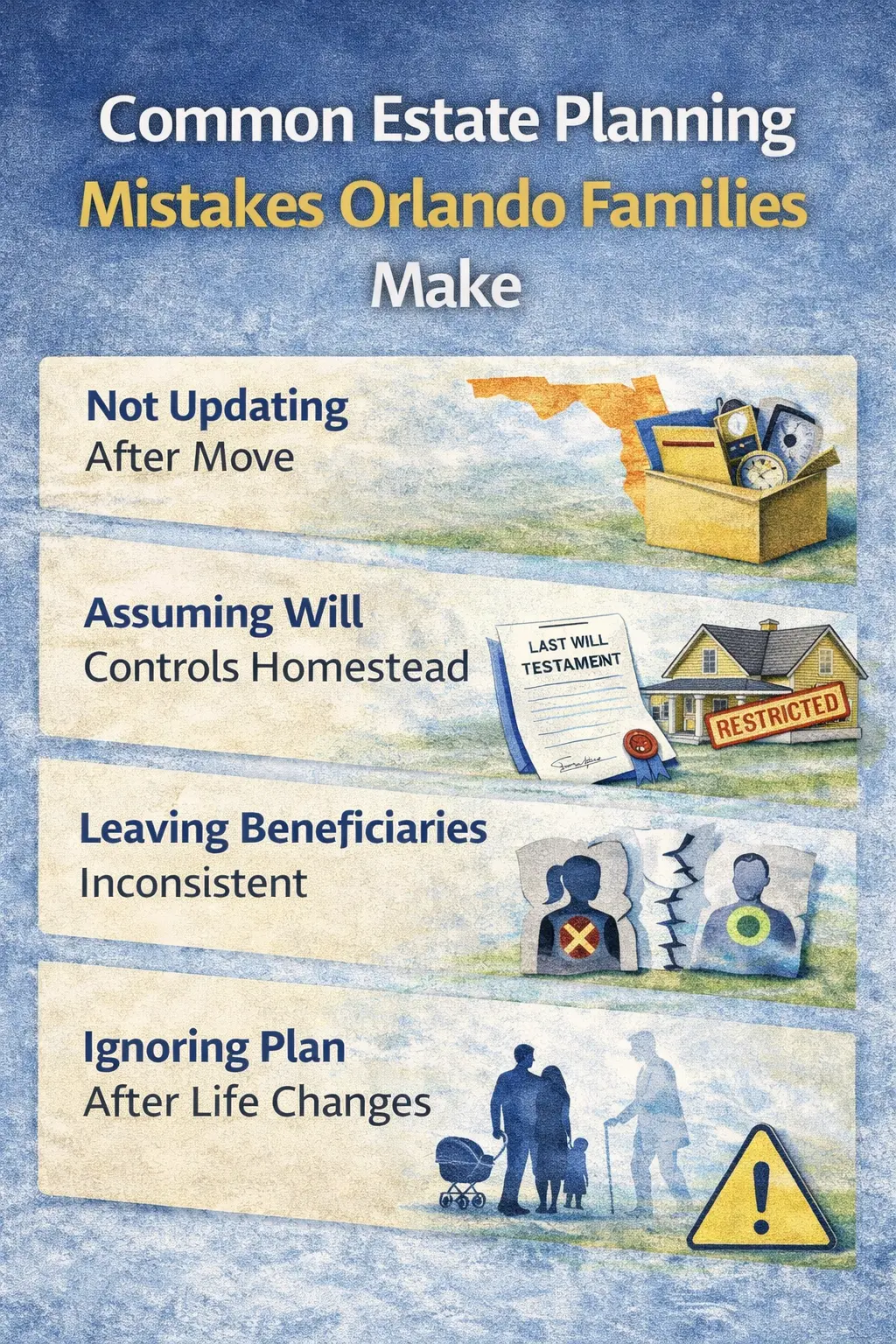
Many estate planning problems result from assumptions rather than intent. Florida families often rely on documents that do not reflect current law, assets, or family structure.
Common mistakes include:
-
Failing to update plans after moving to Florida
-
Assuming a will controls homestead property
-
Leaving beneficiary designations inconsistent
-
Not reviewing documents after life changes
Florida law applies regardless of when or where a document was created.
Florida Estate Planning Checklist for 2026
This checklist helps Orlando families review estate planning readiness under Florida law.
Personal and Family Review
-
Confirm marital status and dependent information.
-
Identify all Florida real estate, including homestead property.
-
Review beneficiary designations on financial accounts.
Document Review
-
Confirm wills and trusts comply with Florida execution rules.
-
Review powers of attorney for statutory compliance.
-
Ensure health care directives reflect current wishes.
Property and Asset Review
-
Verify how real estate is titled.
-
Confirm trusts are properly funded.
-
Review out-of-state assets for Florida coordination issues.
Estate Planning Tools and Their Legal Effects (Table)
| Planning Tool | Primary Purpose | Common Misunderstanding | Legal Risk |
|---|---|---|---|
| Will | Directs probate assets | Assumed to control all property | Homestead override |
| Trust | Manages assets, avoids probate | Not funded properly | Probate still required |
| Power of Attorney | Financial authority | Assumed unlimited | Statutory limits |
| Beneficiary Designations | Transfers assets | Not coordinated with plan | Unintended beneficiaries |
| Health Directive | Medical decisions | Not updated | Decision-making conflict |
Quote-ready:
Estate planning documents must work together to be legally effective in Florida.
How Florida Law Handles Estate Disputes
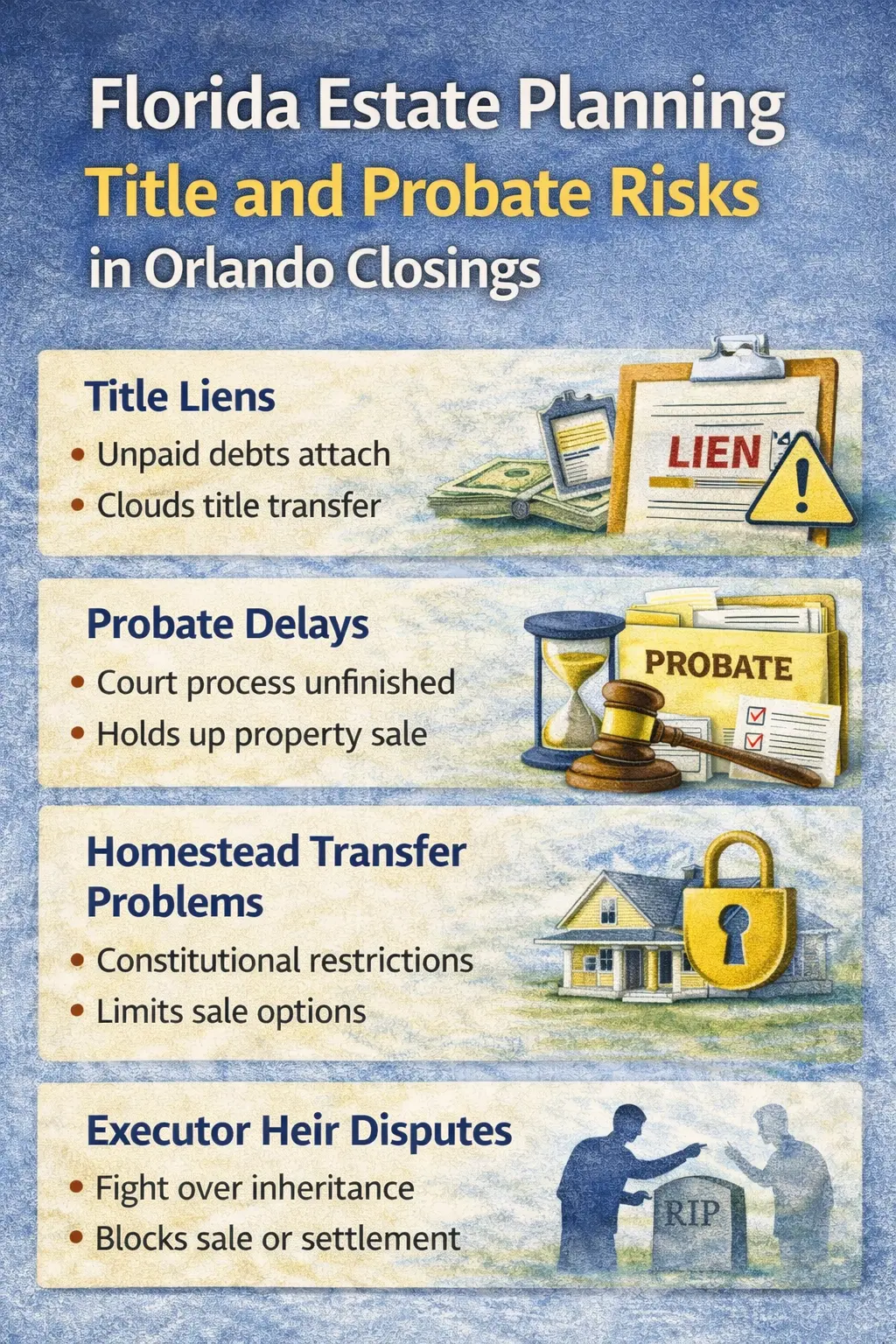
Florida courts resolve estate disputes by applying statutory rules and reviewing document validity. Courts do not rewrite plans to reflect intent if documents fail to comply with legal requirements.
Disputes often involve:
-
Homestead property
-
Beneficiary conflicts
-
Authority disputes
-
Document validity challenges
Clear planning reduces court involvement.
Why Estate Plan Reviews Matter in 2026
Estate planning is not a one-time task. Changes in law, assets, and family structure affect how plans function.
In 2026, Florida estate planning reviews are especially important for:
-
New Florida residents
-
Property owners
-
Blended families
-
Aging parents
Periodic review helps ensure documents remain effective.
Quote-ready:
An outdated estate plan can create the same problems as no plan at all.
Frequently Asked Questions (FAQ)
Is an out-of-state will valid in Florida?
It may be recognized, but it may not account for Florida homestead rules or spousal rights.
Does a will avoid probate in Florida?
No. A will controls probate assets but does not avoid probate.
Are trusts required for estate planning?
No. Trusts are tools used when appropriate based on goals and assets.
Does Florida law protect surviving spouses?
Yes. Florida provides statutory and constitutional protections for surviving spouses.
Should estate plans be reviewed after moving to Florida?
Yes. Relocation to Florida often changes how estate planning documents operate.
Summary for Orlando Families
Florida estate planning law in 2026 continues to apply strict statutory and constitutional rules that affect how assets are managed and transferred. For Orlando families, homestead protections, probate requirements, and document coordination are especially important.
Clear, updated planning helps families reduce conflict, protect assets, and ensure intentions are carried out under Florida law.