

Florida probate law in 2026 governs how estates are administered after death, including how assets are identified, debts are handled, and property is transferred to heirs or beneficiaries. For Orlando families, probate often involves real estate, creditor procedures, and court oversight.
Understanding how Florida probate law works helps families anticipate timelines, reduce delays, and avoid unnecessary disputes.
What Florida Probate Law Means in 2026
Florida probate law in 2026 refers to the statutory rules and court procedures that control estate administration after death. These rules determine when probate is required, which process applies, and how personal representatives must comply with court supervision.
Florida has not replaced its probate laws in 2026. Existing probate statutes continue to be applied strictly, especially regarding notice requirements, creditor claims, and procedural deadlines.
Quote-ready:
Florida probate is a court-supervised legal process governed by statute, not family preference.
Why Probate Matters for Orlando Families
Probate matters because many assets cannot be transferred without court involvement. Orlando families frequently encounter probate due to:
-
Real estate ownership
-
Lack of beneficiary designations
-
Incomplete estate planning
Florida probate rules apply regardless of family expectations. When probate is required, timelines and procedures must be followed exactly, even when the estate is uncontested.
Quote-ready:
Probate timelines are driven by statutory procedures, not by family agreement.
The Legal Framework Governing Probate in Florida
Florida probate is governed by the Florida Probate Code and related court rules. These laws apply statewide, including Orlando and Central Florida.
The legal framework addresses:
-
Appointment of a personal representative
-
Notice to creditors and beneficiaries
-
Asset identification and valuation
-
Payment of valid debts
-
Distribution of remaining assets
Failure to comply with procedural rules can delay or complicate probate administration.
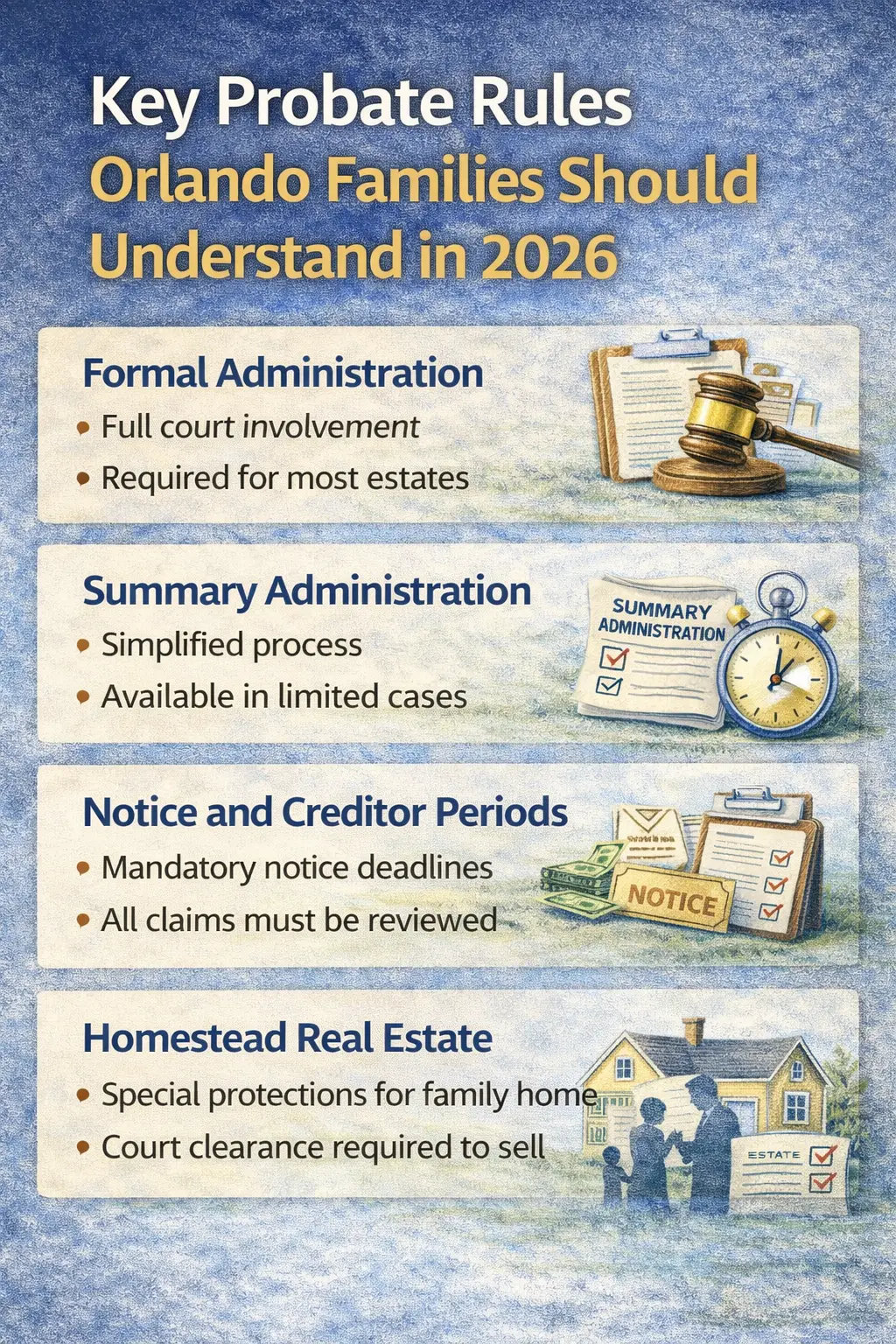
Formal Administration
Formal administration is the most common probate process in Florida. It applies to estates that do not qualify for simplified procedures and requires ongoing court supervision.
It is often required when the estate includes:
-
Real property
-
Significant assets
-
Unresolved legal or financial issues
Summary Administration
Summary administration is a simplified probate process available only when statutory requirements are met. While it may reduce court involvement, eligibility is strictly defined by Florida law.
Not all estates qualify for summary administration.
How Probate Affects Real Estate in Orlando
Real estate is one of the most common reasons probate is required in Orlando. Property owned solely in a decedent’s name often cannot be sold or transferred without probate court authorization.
Common probate real estate issues include:
-
Title clearance
-
Homestead determination
-
Authority to sell property
-
Distribution among heirs
Real estate issues are a primary driver of probate delays.
Quote-ready:
Probate is often required to transfer Florida real estate after death.
Common Probate Delays Under Florida Law
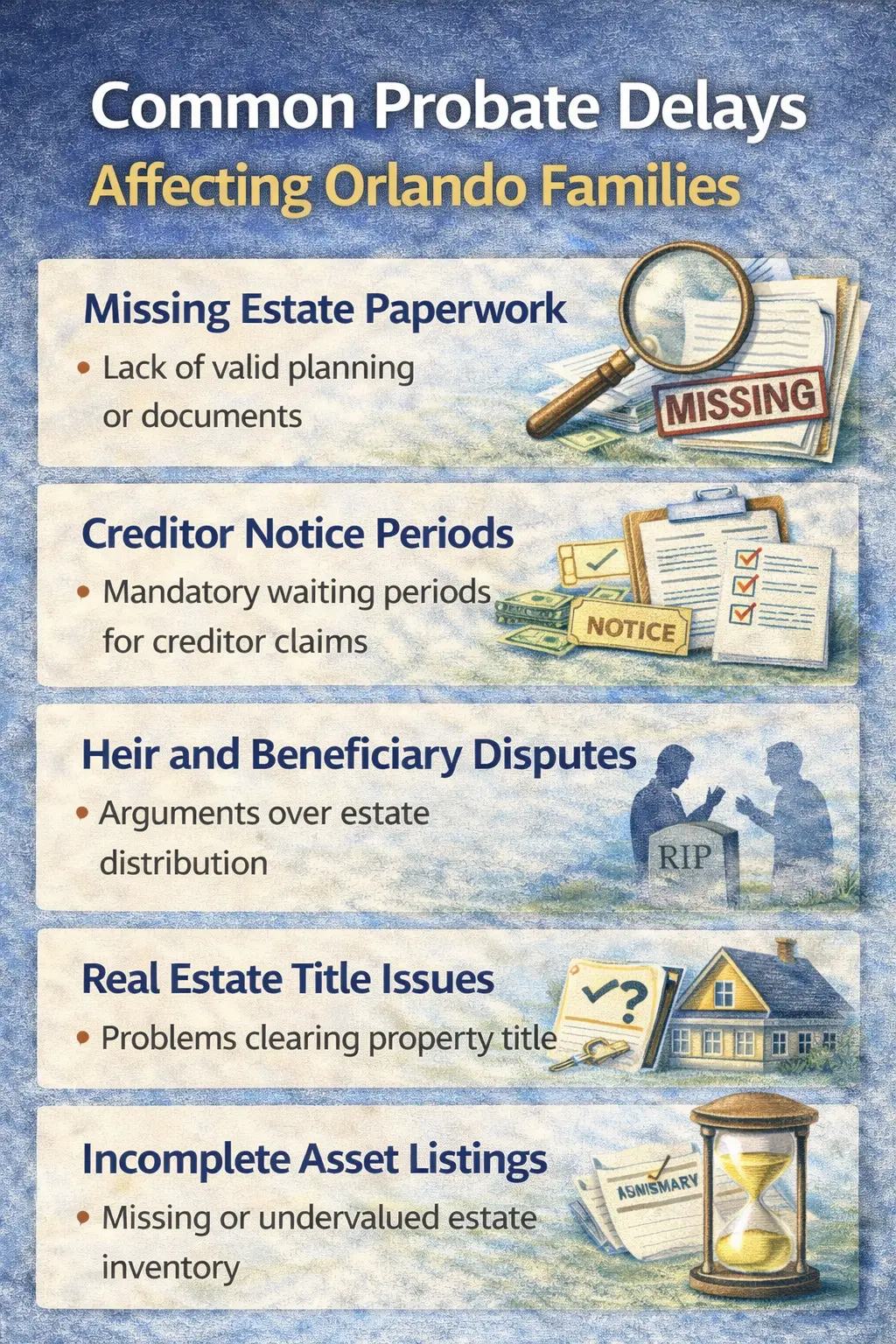
Probate delays usually result from procedural issues rather than court backlog alone. Florida law imposes mandatory waiting periods and notice requirements.
Common causes of delay include:
-
Missing or invalid estate planning documents
-
Creditor notice periods
-
Disputes among heirs or beneficiaries
-
Real estate title complications
-
Incomplete asset information
Advance planning can reduce, but not always eliminate, probate delays.
Florida Probate Checklist for 2026
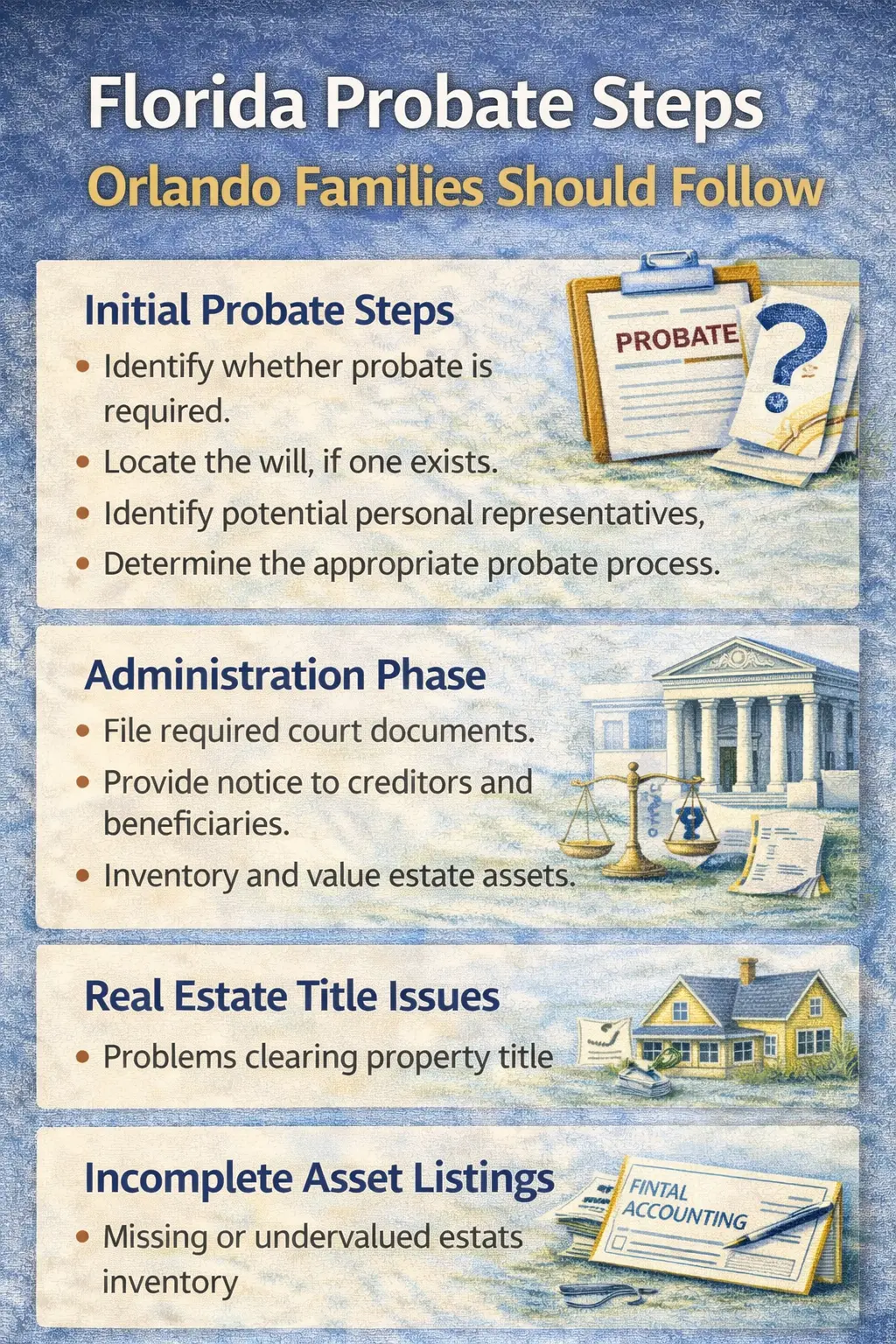
This checklist outlines common procedural steps Orlando families encounter during probate.
Initial Probate Steps
-
Identify whether probate is required
-
Locate the will, if one exists
-
Identify potential personal representatives
-
Determine the appropriate probate process
Administration Phase
-
File required court documents
-
Provide notice to creditors and beneficiaries
-
Inventory and value estate assets
-
Address real estate and title issues
Closing the Estate
-
Resolve valid debts and expenses
-
Prepare final accounting
-
Distribute remaining assets
-
Obtain court discharge when required
Florida Probate Procedures and Risk Table
| Probate Area | Purpose | Common Issue | Legal Risk |
|---|---|---|---|
| Personal Representative | Manages estate | Authority disputes | Court delays |
| Creditor Notices | Protects creditors | Missed deadlines | Extended administration |
| Real Estate | Transfers property | Title defects | Sale delays |
| Asset Inventory | Identifies estate | Incomplete records | Court objections |
| Distribution | Transfers assets | Beneficiary conflict | Litigation risk |
Quote-ready:
Most probate delays result from procedural noncompliance rather than contested estates.
How Florida Law Handles Probate Disputes
Florida courts resolve probate disputes by applying statutory rules and reviewing document validity. Courts do not adjust outcomes based on perceived fairness.
Common probate disputes involve:
-
Will validity
-
Personal representative authority
-
Creditor claims
-
Distribution disagreements
Clear documentation reduces dispute risk.
Why Probate Planning Matters in 2026
Probate planning focuses on reducing uncertainty and administrative burden. While probate cannot always be avoided, planning can simplify the process.
In 2026, probate planning is especially important for:
-
Property owners
-
Blended families
-
Out-of-state heirs
-
Estates with multiple assets
Planning reduces stress during already difficult periods.
Quote-ready:
Effective planning can simplify probate, even when it cannot eliminate it.
Frequently Asked Questions (FAQ)
Is probate always required in Florida?
No. Some assets pass outside probate, but many estates still require court involvement.
How long does probate take in Florida?
Timelines vary based on estate complexity, creditor procedures, and court requirements.
Can probate be avoided with a will?
No. A will directs probate distribution but does not avoid probate.
Does probate apply to real estate?
Yes. Real estate commonly triggers probate when owned individually.
Are all estates eligible for summary administration?
No. Eligibility is limited by statute.
Summary for Orlando Families
Florida probate law in 2026 continues to rely on statutory procedures enforced through court supervision. For Orlando families, probate commonly involves real estate, creditor requirements, and mandatory timelines.
Understanding how probate works helps families prepare for administration, reduce delays, and navigate estate responsibilities with greater clarity.