
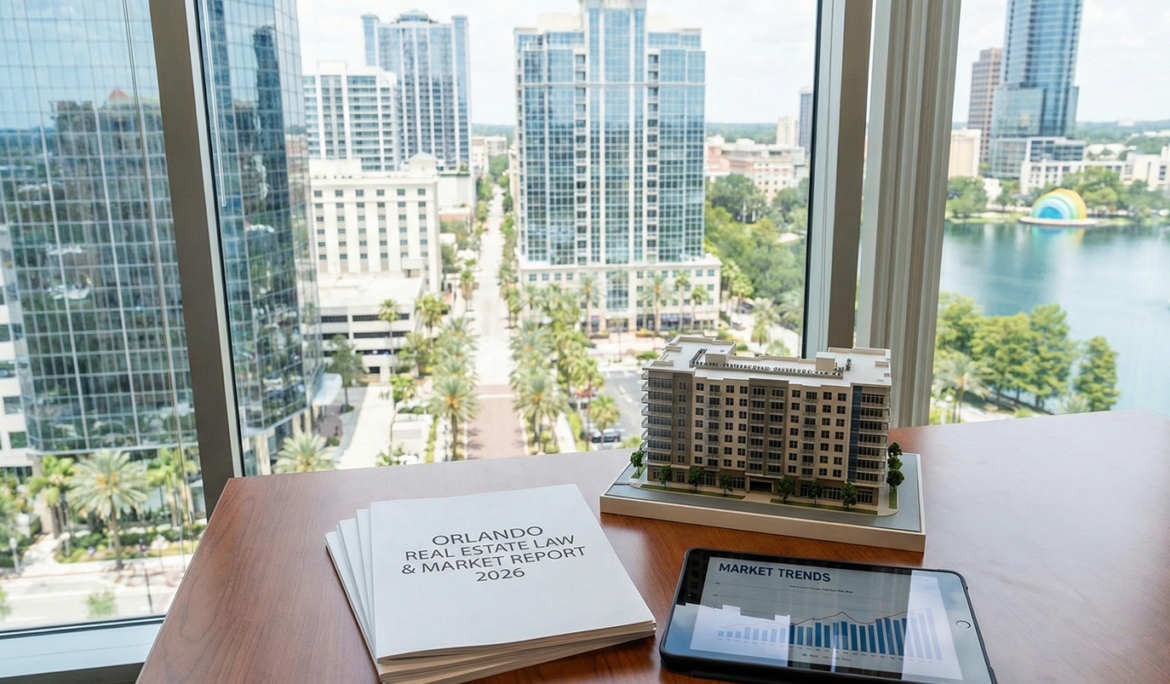
Orlando real estate law in 2026 governs how property transactions are structured, reviewed, and enforced under Florida law. Buyers, sellers, and investors must comply with strict contract deadlines, disclosure obligations, and title requirements. Understanding how these rules apply in Orlando helps prevent disputes, closing delays, and financial exposure in Central Florida real estate transactions.
What Orlando Real Estate Law Means in 2026
Orlando real estate law in 2026 refers to the application of Florida statutes, case law, and contract enforcement standards to residential and commercial property transactions in Central Florida. These rules define how inspection deadlines are enforced, what sellers must disclose, and how contracts are interpreted if disputes arise.
Florida has not replaced its real estate laws in 2026. Instead, existing legal principles continue to be applied with strict enforcement. Missed deadlines or undisclosed known defects can create binding legal consequences.
Quote-ready:
Florida real estate contracts are legally binding agreements enforced according to their written terms.
Why Orlando Real Estate Transactions Face Higher Legal Risk
Orlando real estate transactions face increased legal risk due to high transaction volume, investor activity, relocation buyers, and a wide range of property types. These factors increase the likelihood of missed deadlines, disclosure disputes, and ownership complications.
Many Orlando buyers come from out of state and are unfamiliar with Florida law. Florida law does not adjust legal obligations based on market pressure or urgency.
Quote-ready:
Market competition does not reduce or modify legal duties under Florida real estate law.
The Legal Nature of Florida Real Estate Contracts
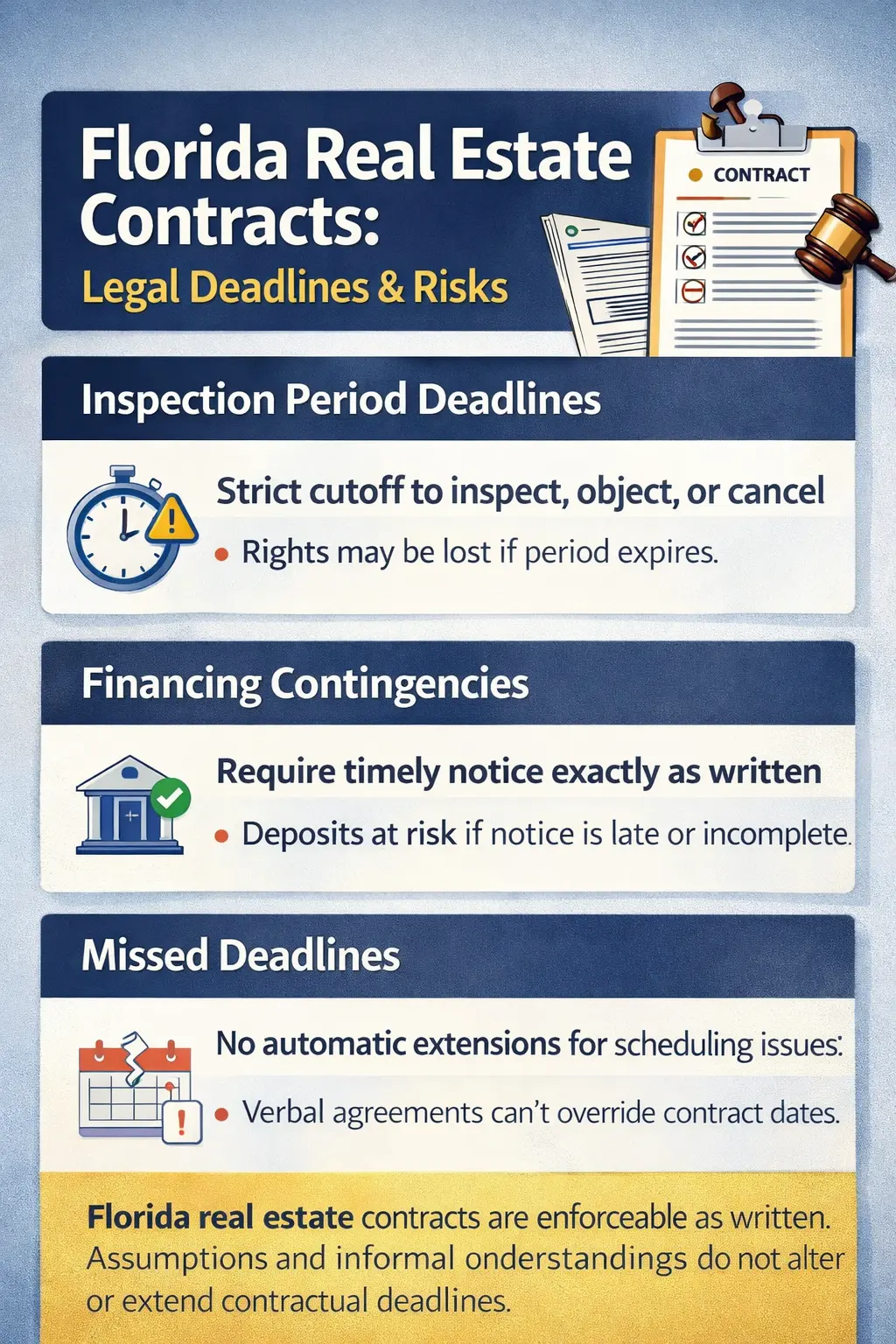
Florida real estate contracts are enforceable legal documents that assign rights, responsibilities, and deadlines to buyers and sellers. Once signed, the contract governs the transaction unless it is formally amended in writing.
Contracts typically define inspection periods, financing contingencies, closing dates, default remedies, and notice requirements. Verbal statements or assumptions do not override written contract language.
Quote-ready:
Florida real estate disputes are resolved by contract language, not informal understandings.
Inspection Deadlines Are Strict Legal Cutoffs
Inspection periods exist only for the number of days stated in the contract. If a buyer does not inspect or object within that time, the buyer may lose the right to renegotiate or cancel based on property condition.
Florida law does not automatically extend inspection deadlines for scheduling issues or oversight.
Quote-ready:
Missing an inspection deadline can permanently limit a buyer’s legal remedies.
Financing Contingencies Provide Limited Protection
Financing contingencies protect buyers only when notice requirements are met exactly as written. Failure to provide timely notice may place deposits at risk even when financing approval fails.
Financing clauses should not be treated as unconditional protection.
Seller Disclosure Obligations Under Florida Law
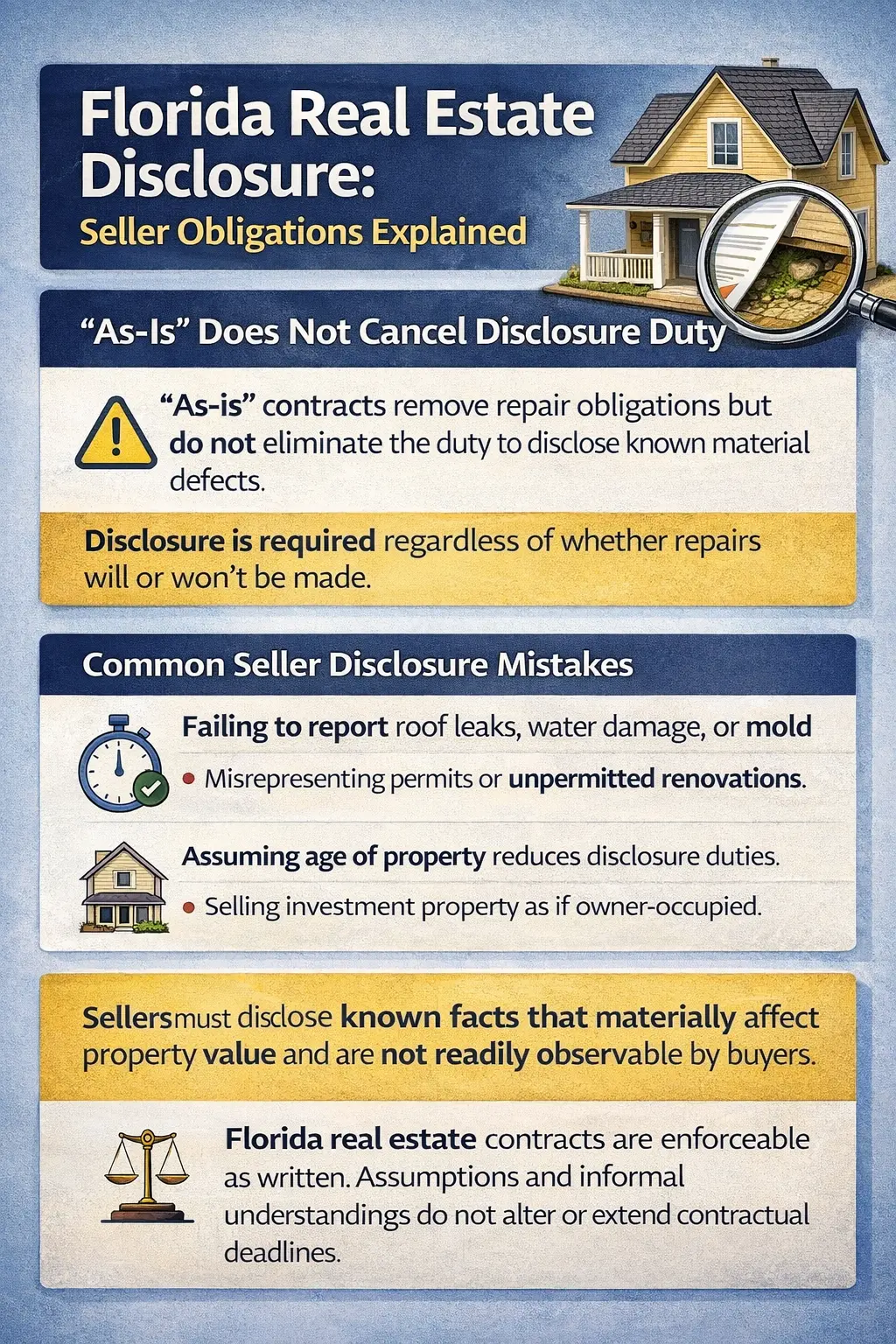
Florida law requires sellers to disclose known facts that materially affect property value and are not readily observable by buyers. This obligation applies regardless of whether the property is sold “as-is.”
Disclosure duties commonly involve structural issues, water intrusion, prior repairs related to defects, and conditions affecting habitability.
Quote-ready:
“As-is” contracts do not eliminate a seller’s duty to disclose known material defects.
Common Disclosure Errors in Orlando Transactions
Sellers often underestimate disclosure obligations when selling older homes, rental properties, or renovated residences. Assumptions that age, inspection rights, or renovations excuse disclosure are legally incorrect.
Disclosure disputes frequently arise after closing, when buyers discover issues they believe should have been disclosed earlier.
Inspection Rights and Due Diligence in Orlando
Inspection rights exist only through the purchase contract. Buyers must actively schedule inspections, review reports, and provide written notice within the inspection period to preserve their rights.
Common Orlando inspection concerns include roofing systems, HVAC performance, drainage, plumbing, and foundation movement.
Quote-ready:
Inspection rights are contractual, not automatic, under Florida law.
Title and Ownership Issues in Central Florida Closings
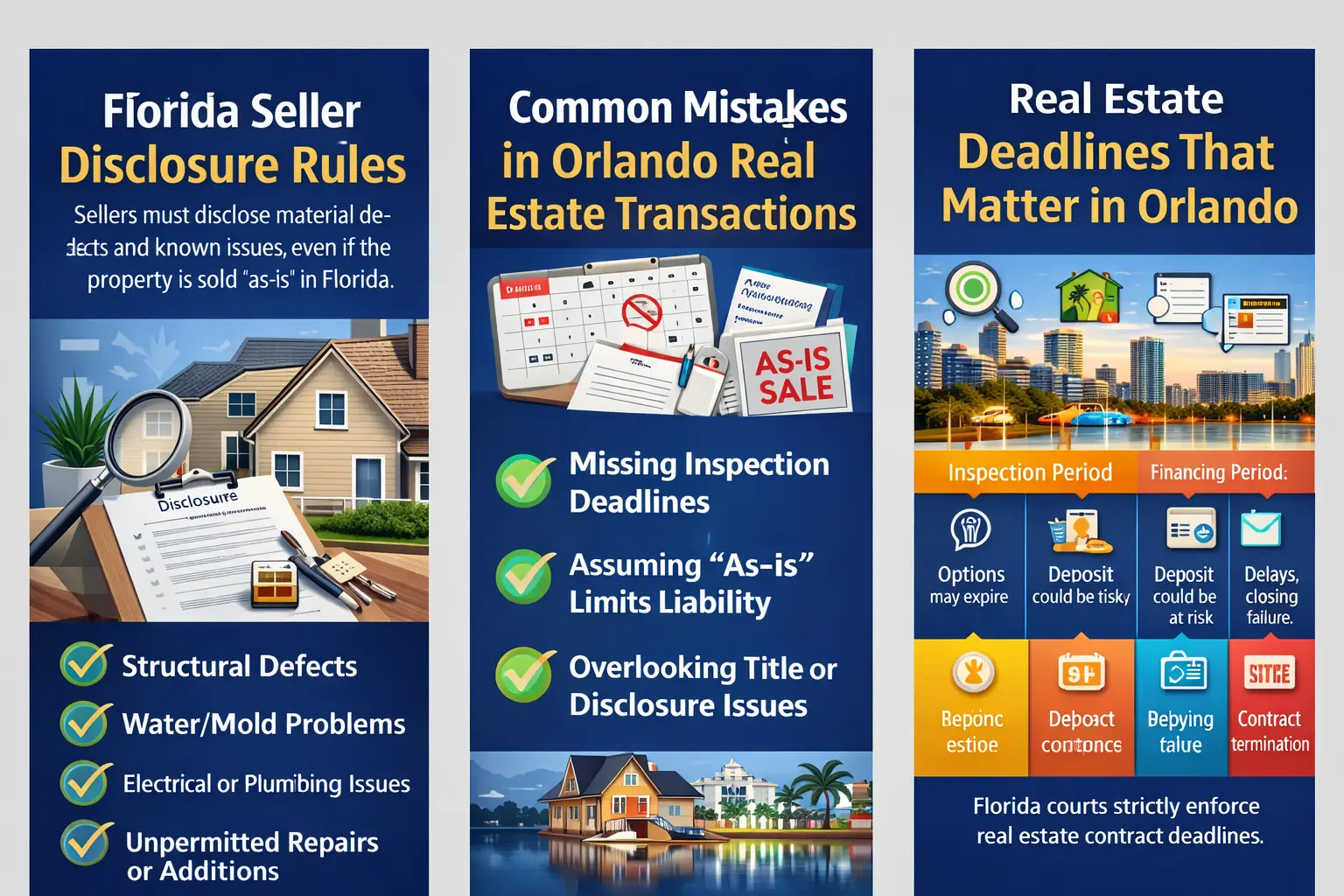
Clear title is required for a lawful real estate closing in Florida. Title defects must be resolved before ownership can legally transfer.
Common Orlando title issues include unreleased liens, inherited property without probate, trust or entity ownership discrepancies, and easement conflicts. Late discovery of title issues often delays or prevents closing.
Real Estate Investors and Florida-Specific Legal Rules
Orlando attracts investors who frequently rely on strategies developed in other states. Florida real estate law includes unique considerations that create risk when overlooked.
Investor-specific issues include homestead implications, disclosure obligations when selling investment property, and authority requirements for entity-owned real estate.
Quote-ready:
Florida real estate law applies equally to investors and owner-occupants.
Common Legal Mistakes Orlando Buyers Make
Most buyer disputes arise from misunderstanding contractual obligations rather than intentional misconduct.
Common buyer mistakes include:
-
Missing inspection deadlines
-
Relying on verbal assurances
-
Assuming disclosures are complete without review
-
Misunderstanding contract amendments
Florida law places responsibility on buyers to understand what they sign.
Common Legal Mistakes Orlando Sellers Make
Seller disputes most often involve disclosure errors and unresolved ownership issues.
Common seller mistakes include:
-
Assuming “as-is” limits liability
-
Failing to disclose known defects
-
Overlooking liens or title issues
-
Misunderstanding post-contract duties
Early preparation significantly reduces legal exposure.
Orlando Real Estate Checklist for 2026 Transactions
This checklist helps prevent missed deadlines, disclosure problems, and closing delays in Orlando real estate transactions.
Buyer Checklist
-
Confirm inspection period length and exact deadline.
-
Schedule inspections immediately after contract execution.
-
Review seller disclosures for completeness.
-
Track inspection, financing, and closing deadlines in writing.
-
Provide written notice within required timeframes.
Seller Checklist
-
Disclose known material defects accurately.
-
Resolve liens, open permits, or title issues before closing.
-
Confirm authority to sell if property is held by a trust or entity.
-
Respond to buyer notices in writing and on time.
Orlando Real Estate Deadlines and Risk Table (2026)
| Transaction Area | What It Controls | Common Mistake | Typical Risk |
|---|---|---|---|
| Inspection Period | Buyer’s right to inspect or cancel | Delayed inspections | Loss of negotiation or cancellation rights |
| Disclosure Review | Buyer’s understanding of known defects | Treating disclosures as routine | Post-closing disputes |
| Financing Contingency | Protection if financing fails | Missing notice deadlines | Deposit risk |
| Title Review | Ability to transfer ownership | Late discovery of liens | Closing delays |
| Closing Timeline | Final performance | Waiting until last week | Rushed decisions or termination |
Quote-ready:
Most Orlando closing delays are caused by missed deadlines, incomplete disclosures, or unresolved title issues.
How Florida Law Resolves Real Estate Disputes
Florida courts resolve real estate disputes by reviewing written contracts, statutory duties, and documented conduct. Courts strictly enforce deadlines, notice requirements, and disclosure standards.
Disputes are rarely decided based on fairness alone.
Quote-ready:
Florida courts prioritize contract compliance over intent or expectation.
Why Legal Review Matters More in 2026
Digital transactions and compressed timelines increase the risk of oversight. Legal review helps identify risks before they become disputes.
Legal review focuses on deadlines, disclosures, title issues, and risk allocation. Preventive review often reduces delays rather than causing them.
Summary for Buyers, Sellers, and Investors
Orlando real estate law in 2026 continues to rely on established Florida legal principles enforced through written contracts and statutory duties. Most disputes arise from missed deadlines and misunderstood obligations.
Preparation, clarity, and compliance remain the most effective tools for protecting real estate interests in Central Florida.